The best solar panels for a home are not necessarily the ones with the highest efficiency rating. A good choice fits your usable roof space, produces useful electricity under local conditions, and comes with an installation plan and warranty you can evaluate.
For US homeowners comparing options as of October 9, 2026, panel selection also depends on utility rules, financing, and roof condition. Start with your household’s needs, then compare equipment using the same assumptions rather than relying on a brand ranking.
What Panel Efficiency Really Means
Panel efficiency measures how much incoming sunlight a module converts into electricity under standardized test conditions. A more efficient panel can deliver more rated power from the same surface area. That matters when roof space limits how many panels you can install.
Efficiency is not annual energy production. A module’s watt rating describes power under test conditions; your electric bill measures energy in kilowatt-hours, or kWh. Actual production depends on sunlight, orientation, shade, temperature, inverter performance, and other system losses.
The most efficient solar panels can be valuable on a compact roof, but they are not automatically the best financial choice. With ample unshaded space, a somewhat less efficient module may support the same system capacity at a lower quoted price.
Match the Panels to Your Roof
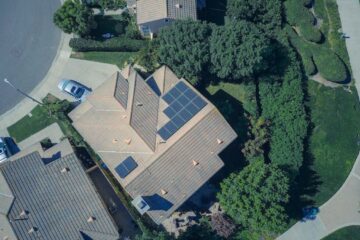
Ask each installer to show the proposed layout, not just a panel count. Fire access pathways, roof edges, vents, skylights, and mounting requirements can reduce usable space. A physically larger panel with a higher watt rating might fit less neatly than a smaller module.
- Limited roof area: Compare total system capacity that actually fits, rather than individual panel wattage.
- Hot conditions: Compare power temperature coefficients. A less negative coefficient means a smaller rated power reduction as cell temperature rises above the reference temperature.
- Partial shade: Request a shading analysis. Microinverters or optimizers can help manage mismatch, but they cannot recover sunlight blocked by a tree.
- Older roofing: Assess remaining roof life before installation and obtain written removal and reinstallation terms.
- Harsh weather: Check module test ratings, mounting design, and applicable local wind and snow requirements.
South-facing roofs often provide strong annual output in the United States, but east- and west-facing arrays can also be useful. Under time-varying rates, the timing of generation may affect savings. Ask for an hourly model when your tariff makes timing important.
Compare Technology Without the Hype
Monocrystalline silicon panels are a common residential choice. Within that category, labels such as TOPCon, heterojunction, and back-contact describe different cell designs. These technologies can offer efficiency or temperature-performance advantages, but a technology label alone does not establish which complete module is better.
Compare specific model numbers and datasheets. Check dimensions, rated output, efficiency, temperature coefficient, product warranty, and guaranteed degradation. Do not assume every product from one manufacturer shares the same specifications or warranty terms.
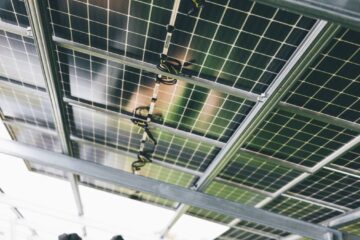
Bifacial panels can generate electricity from light reaching their rear surface. On a roof-mounted array with little clearance and limited reflected light, that benefit may be constrained. Any promised extra production should be supported by assumptions specific to your roof and mounting arrangement.
All-black panels can appeal aesthetically, while other designs may prioritize output or price. Compare the actual models: appearance alone does not reliably predict performance. Ask whether substitutions require your written approval before equipment is ordered.
Read Warranties as Separate Promises
A product warranty generally addresses covered defects. A performance warranty describes minimum output over time, usually subject to testing procedures and exclusions. Neither necessarily pays every expense involved in diagnosing, shipping, removing, or replacing a failed panel.
Installer workmanship coverage is separate again. It may address installation defects or roof penetrations, but scope and duration vary. Inverter and battery warranties also have their own terms.
Request the actual documents and identify who handles claims, whether labor and travel are covered, and whether coverage transfers to a buyer. Compare the guaranteed first-year output and subsequent degradation schedule without treating a warranty floor as a forecast of actual production.
Size the System From Real Usage
- Collect 12 months of bills. Record monthly kWh consumption, rate plans, and fixed charges. Download interval usage if available.
- Identify planned changes. An electric vehicle or heat pump may increase demand; insulation or efficient appliances may reduce it.
- Request a site-specific estimate. The proposal should identify shading, roof orientation, weather inputs, and modeled system losses.
- Compare consistent targets. Ask installers to quote the same approximate capacity or annual production goal before comparing upgrades.
- Check utility limits. Confirm interconnection requirements, permitted system sizing, and any relevant export restrictions.
Hypothetical sizing example: A household uses 10,800 kWh annually. An installer models a site-specific yield of 1,350 kWh per installed kilowatt of DC capacity each year. Dividing 10,800 kWh by 1,350 kWh/kW gives an 8 kW DC system.
Twenty 400-watt panels provide 8,000 watts, or 8 kW. Eighteen 450-watt panels provide 8.1 kW. The second layout uses fewer modules, but roof fit, dimensions, installed price, and modeled output still need comparison. These figures are illustrative, not a production guarantee.
Matching annual consumption does not eliminate the electric bill. Your home may import electricity at night and export it midday, while fixed charges and the utility’s crediting rules still apply.
Calculate Savings Under Your Tariff
Net metering and net billing are different arrangements, and program names do not replace reading the tariff. Exports may receive credits below retail prices, with limits on rollover or settlement. Credits are not necessarily cash payments.
California’s applicable net billing arrangements use variable export compensation rather than a simple assumption that every exported kWh offsets a retail-priced kWh. Verify your utility, enrollment status, and current rate schedule before accepting a savings projection.
Hypothetical first-year example: An array produces 10,000 kWh. The household uses 6,000 kWh directly, avoiding an assumed $0.25 per kWh in variable import charges: $1,500. It exports 4,000 kWh at an assumed average credit of $0.07 per kWh: $280. Total modeled value is $1,780 before other costs or adjustments.
If the hypothetical cash price is $20,000, dividing by $1,780 gives approximately 11.2 years of simple payback. This is not a market estimate. It ignores financing, maintenance, equipment replacement, degradation, rate changes, and the time value of money. Fixed utility charges generally remain.
Check Incentives and Ownership
The federal Residential Clean Energy Credit under Section 25D is not available for property placed in service after December 31, 2025. Do not include a 30% federal residential credit in the economics of a new installation placed in service in 2026. The IRS confirms this termination.
State, local, and utility programs vary. Verify availability, funding, application deadlines, equipment rules, and ownership requirements directly with the administering organization. Do not sign based on a salesperson’s unverified rebate promise.
Compare cash purchases, loans, leases, and power purchase agreements separately. A loan comparison should show the cash price, financed principal, interest rate, term, fees, and total payments. Leases and PPAs require scrutiny of escalators, maintenance responsibilities, buyout provisions, and home-sale transfer conditions.
“No-cost solar” usually describes financing, a lease, or a PPA—not free equipment. Legitimate assistance programs may exist, but verify the sponsor and terms. Equipment ownership affects control, contract obligations, and what happens when you sell.
Decide Whether Storage Helps
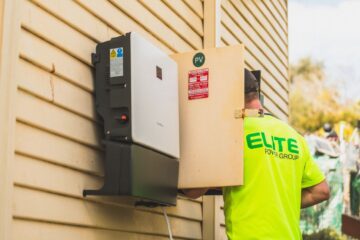
Batteries can shift solar energy to later hours and provide backup when properly configured. Battery power, measured in kW, determines the load it can supply at once. Usable energy, measured in kWh, helps determine how long it can supply that load.
For a hypothetical 10 kWh usable battery serving a steady 1 kW load, simple division suggests 10 hours. Actual runtime depends on reserve settings, conversion losses, temperature, and changing loads. Starting an air conditioner can require substantially more power than running lights or a refrigerator.
Tesla Powerwall, Enphase, and FranklinWH are options worth comparing through current system designs rather than a universal ranking. Compare inverter integration, compatibility with existing solar, modular expansion, load controls, and service support. Verify current specifications, warranty conditions, and complete installed quotes for each proposed configuration.
Grid-tied solar alone generally shuts down during an outage. Backup requires appropriate equipment, controls, and safe islanding from the grid. Specify critical loads and ask whether the proposed system supports them—not merely whether it includes a battery.
Your Final Proposal Checklist
- Exact panel, inverter, and battery models, with substitution terms.
- Roof layout, DC capacity, and documented annual production assumptions.
- Itemized price, financing disclosures, and verified incentive assumptions.
- Utility tariff, export compensation, and interconnection responsibilities.
- Permitting, roof work, monitoring access, and installation schedule.
- Written equipment, workmanship, service, and ownership-transfer terms.
Frequently Asked Questions
Are higher-efficiency panels worth it?
Often when usable roof space is scarce. Compare the added installed cost against the additional modeled production and its value under your tariff. With ample space, extra efficiency may offer little financial advantage.
Should I choose the highest wattage?
Not by itself. Higher wattage can reflect a physically larger panel rather than greater efficiency. Compare roof-fit capacity, dimensions, and annual energy estimates for complete layouts.
Will solar power my home in outages?
Not with a conventional grid-tied system alone. Ask for a documented backup design with proper islanding, sufficient power output, and enough usable storage for selected loads.
How many quotes should I obtain?
Three comparable written proposals are a useful starting point. Give each installer the same usage records and request consistent assumptions so differences in equipment, service, and price are visible.
Choose the Strongest Complete System
The best solar panels balance roof-fit efficiency, dependable documentation, and a sensible installed price. Choose the proposal that explains production, utility savings, ownership obligations, and service clearly. An efficiency headline is useful only when the complete system works for your home.
This article provides general information, not individualized tax, financial, electrical, or engineering advice. Verify current program rules and project requirements with the relevant authorities and qualified professionals.
Official References
https://www.energy.gov/energysaver/solar-energy
https://www.irs.gov/credits-deductions/residential-clean-energy-credit
https://consumer.ftc.gov/consumer-alerts/2024/08/how-avoid-getting-burned-solar-or-clean-energy-scams
https://www.cpuc.ca.gov/industries-and-topics/electrical-energy/demand-side-management/customer-generation