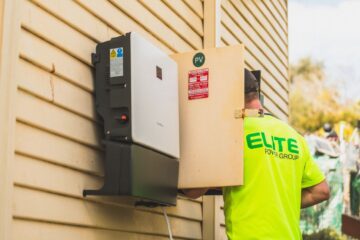
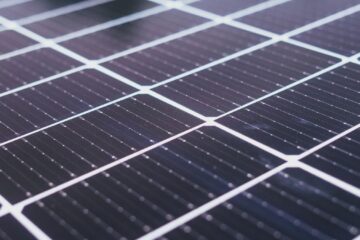
Ads for free solar panels can make it sound as though someone will install a system on your roof and erase your electric bill without asking for anything in return. Usually, “free” means no upfront payment—not no cost. The offer may involve a loan, lease, or power purchase agreement with obligations lasting years.
That does not make every no-money-down offer a scam. Some arrangements are legitimate, and verified assistance programs may help eligible households. The important questions are who owns the equipment, what you must pay, and whether the promised savings survive a careful review of the contract.
What “Free” Usually Means
Before evaluating savings, identify the arrangement. These four options create different obligations:
- Solar loan: You generally own the system and repay borrowed money. Interest and financing-related charges can increase the total cost.
- Solar lease: A company owns the equipment, and you pay to use it. Payments may increase under a contractual escalator.
- Power purchase agreement: A company owns the system, and you buy its electricity at an agreed price per kilowatt-hour (kWh). Rate increases may apply.
- Verified assistance: A government, utility, or nonprofit program may cover some or all qualifying costs. Availability and eligibility are program-specific.
A lease or power purchase agreement, often called a PPA, may include maintenance. That service has value, but it does not make the electricity free. Ask about administrative charges, insurance requirements, roof work, and end-of-term removal or purchase terms.
The Federal Credit Changed
As of October 9, 2026, the federal Residential Clean Energy Credit under Internal Revenue Code Section 25D is not available for property placed in service after December 31, 2025. The IRS confirms that termination. A proposal for a new 2026 installation should not subtract a homeowner’s 30% federal residential credit from its price.
Treat an outdated tax-credit slide as a reason to stop and request a corrected proposal. Ask for the actual contract price and payment schedule without that credit. A salesperson’s assurance that “everyone qualifies” is not tax guidance.
State, local, and utility incentives may still exist, but verify them directly with the administering organization. Confirm funding, eligibility, deadlines, approved equipment, and whether incentives go to you or the system owner. Do not confuse a provider’s potential business incentives with a credit you can personally claim.
Spot the Difference: Sales or Scam?
A legitimate company should let you review complete documents, verify its identity, and compare offers. Solar panel scams often rely on pressure, impersonation, or promises that disappear when you ask for written terms.
- False affiliation: A seller claims to represent your utility or a government program but cannot substantiate that relationship.
- Artificial urgency: You are told to sign immediately to receive an unverified benefit.
- Hidden financing: A “qualification form” turns out to authorize a loan, credit application, or binding agreement.
- Guaranteed bill elimination: The pitch ignores utility charges, nighttime purchases, financing payments, or seasonal variation.
- Restricted review: The seller refuses to provide the entire contract before electronic signing.
Verify any claimed utility relationship through contact information from your own bill. Check required contractor licensing with the relevant state or local authority. Registration alone does not prove workmanship or financial stability, so also investigate complaint patterns and ask who actually performs the installation.
Compare the Whole Monthly Cost
Solar savings depend on consumption, production, utility rates, export compensation, and contract costs. Request an estimate using at least 12 months of your electricity usage—not just your highest summer bill.
The proposal should separate electricity consumed directly in your home from electricity exported to the grid. Net metering and net billing are not interchangeable. Export credits may differ from retail electricity prices, may not be payable in cash, and may have expiration or settlement rules.
California’s net billing arrangements use variable export compensation, so “every solar kilowatt-hour offsets the full retail rate” is not a reliable assumption. Verify your utility’s actual tariff, including import rates, fixed charges, and rules for existing versus newly interconnected systems.
A Hypothetical Savings Test
Suppose a household previously paid $180 monthly for electricity. Under a hypothetical solar loan, its payment is $125, while its remaining utility bill averages $65. The combined expense is $190—not a saving, even though the utility bill fell sharply.
Now suppose the same household instead receives a hypothetical PPA offer: 8,000 kWh of annual production at $0.16 per kWh. That equals $1,280 annually, or about $107 monthly on average, before remaining utility charges. Actual monthly payments may vary with production.
If that PPA has a 2.9% annual price escalator, its year-two rate becomes approximately $0.1646 per kWh. These figures are illustrations, not current market quotes. Compare the full contract term, and do not assume utility prices will rise faster than the contract rate.
Match the System to Your Home
Ask for the proposed capacity in kilowatts (kW), estimated annual generation in kWh, and assumptions about shading, roof orientation, weather, and panel degradation. Capacity is a power rating; annual generation is an energy estimate. They are not the same measurement.
For illustration, a 6 kW system modeled at 1,300 kWh per installed kW annually would produce 7,800 kWh per year. That yield is hypothetical and location-dependent. Request a site-specific assessment rather than treating a sales calculator as a production guarantee.
Review roof age and condition before committing. If replacement is likely during the agreement, get written pricing or responsibility rules for panel removal and reinstallation. Include expected electric-vehicle charging or heating changes, but avoid oversizing solely on vague promises of profitable exports.
Battery Backup Is a Separate Decision
Ordinary grid-tied solar often shuts down during an outage. Backup requires equipment and controls that safely isolate the home from the grid, along with a design that supports the intended loads. Panels alone should not be sold as guaranteed outage protection.
Battery power, measured in kW, determines how much equipment can run simultaneously. Usable energy, measured in kWh, helps determine runtime. A hypothetical 10 kWh of usable storage supplying a steady 1 kW load suggests about 10 hours before accounting for operating reserves and losses.
Tesla Powerwall, Enphase, and FranklinWH are options to investigate, not interchangeable answers. Compare their current models’ compatibility with your solar equipment, continuous and starting power, usable storage, expansion options, and monitoring. Check current specifications, warranty conditions, local service support, and an installed quote.
Ask the installer to identify critical loads, such as refrigeration and selected outlets, and explain whether air conditioning or other large appliances can operate during an outage.
Ownership Matters When You Move
Ownership affects maintenance, insurance, incentives, and a future home sale. With a purchased system, determine whether a loan must be paid off and whether financing creates a lien or another security interest that requires attention during closing.
A lease or PPA may require the buyer to assume the agreement, qualify with the provider, or accept a transfer process. Alternatively, you may need a buyout. Do not accept “it transfers easily” without reviewing the actual conditions and fees.
Also distinguish the panel manufacturer’s warranty from inverter coverage, installation workmanship, roof-penetration coverage, and any production guarantee. Ask who handles each claim if the original installer closes. A long equipment warranty does not necessarily cover labor, shipping, or roof repairs.
Your Before-Signing Checklist
- Collect competing proposals. Request comparable system sizes and separate prices for batteries, roof work, and electrical upgrades.
- Request cash and financed prices. Compare the amount financed, APR, total payments, fees, and any scheduled payment change.
- Challenge incentive assumptions. Remove unavailable Section 25D credits from new 2026 installation calculations and independently confirm other benefits.
- Verify utility rules. Confirm interconnection requirements, export compensation, recurring charges, and permission-to-operate procedures.
- Read every agreement. Review escalators, maintenance duties, production promises, transfer conditions, buyouts, cancellation terms, and dispute procedures.
- Save the evidence. Keep advertisements, emails, proposals, signed documents, and the salesperson’s claimed affiliations.
Do not share utility-login credentials or sensitive financial information just to receive a basic estimate. If you discover misleading terms after signing, promptly contact the company and lender in writing. Cancellation rights depend on the transaction and applicable law; do not assume a universal deadline. Suspected fraud can also be reported to the FTC and your state attorney general.
Frequently Asked Questions
Can panels ever be truly free?
Possibly, through a verified assistance program that covers eligible installation costs. Confirm household qualifications, ownership, maintenance responsibilities, and any repayment or occupancy conditions directly with the administrator. An advertisement alone is not proof of eligibility.
Is a solar lease always a bad deal?
No. A lease can reduce upfront spending and assign some maintenance duties to the provider. Its value depends on total payments, escalation, utility savings, service terms, and transfer restrictions. Compare it against purchasing and keeping your existing electricity service.
Will solar eliminate my utility bill?
Not necessarily. You may still buy electricity when production is insufficient and pay fixed or other applicable charges. Export credits depend on your tariff. Any loan, lease, or PPA payment is also part of your energy spending.
What if a seller promises a tax credit?
Ask which credit, who claims it, and what legal eligibility supports the claim. For property placed in service after December 31, 2025, the homeowner Section 25D credit is unavailable. Have uncertain tax claims reviewed independently before signing.
The Bottom Line
Free solar panels are usually a payment arrangement, not a giveaway. A worthwhile offer should make ownership, total costs, utility assumptions, and exit conditions understandable. If the seller cannot explain those points without pressure or unavailable incentives, walk away and compare alternatives.
This article provides general consumer information as of October 9, 2026, not individualized tax, legal, or financial advice. Verify program rules and contract terms independently.
Official References
https://www.energy.gov/energysaver/solar-energy
https://www.irs.gov/credits-deductions/residential-clean-energy-credit
https://consumer.ftc.gov/consumer-alerts/2024/08/how-avoid-getting-burned-solar-or-clean-energy-scams
https://www.cpuc.ca.gov/industries-and-topics/electrical-energy/demand-side-management/customer-generation